Aviation & Car tech: Reviews, How to's, Products, Shows, Design & Manufacturing, photography, video, Home built aircraft, UAV / RC, General Aviation, Car fix & mod
The Davis DA-2 was designed as an Experimental market aircraft with a first flight in 1966. this compact 2 seater was originally powered by a Continental A65 but the O-200A would be a better choice with the DA-2A. Being an O-200 option it can also work with other powerplants like the Corviar. By the mid 80’s 45 where built.
This aircraft of the month is the Globe Swift, aimed at the “predicted” post WWII Aviation boom Globe aircraft designed and built the Swift to offer a sporty aircraft more similar to the advanced fighter aircraft of the war than pre war tube and fabric high wing aircraft.
What was not factored into the equation was the once in a lifetime gigantic surplus of WWII aircraft put on the open market at an extreme discount. Production ended in 1951 but with over 1,500 built you can still see them at airports every now and then.
Another connection I have is Mark Langford from the Corvair aviation community also owns (last I knew) a 1946 Globe Swift, Some truly impressive flight photos on his web site from both the KR2 and Swift http://www.n56ml.com/sunsets/ .
Because of its production numbers, looks and years it has been around there are quite a few YouTube Videos on it.
There is some swift merch but its on independent sites (not amazon)
This aircraft of the month is the Zenith 600 series. It’s a 2 seat, low wing, all metal kitplane with several power options.
I first encountered the 600 series when I was part of the Fly Corvair hanger gang. William was developing the Corvair based fire wall forward package for the aircraft. If your looking for a 100 – 120 hp opposing 6 cylinder direct drive butter smooth power plant with excellent parts availability I would highly recommend checking out https://flycorvair.net/ & https://www.youtube.com/@WWFlycorvair
The 601 I got to fly had excellent handling qualities and good power with the base 2700 / 0-164 Corvair power plant.
First flight was back in 1984 and designed by Chris Heintz & Avions Pierre. I got to attend a few of Chris’s forums at Airventure & Sun-N-Fun, he was a very skilled Engineer.
Cargo was setup side by side with leading edge mounted doors
Only one XCG-16 was produced and flown. It had good flight qualities however had other deficiencies that turned the vote to the Waco offering.
For such an odd WWII one off prototype there are a few good videos on YouTube about it:
Very surprising there are no hits on Outerzone for the XCG-16.
With the ruled surfaces it would be rather easy to build one of these out of Balsa or even foam board.
Massive thanks to the Cafsocal web site above a detailed pdf is available, see the quick link below, with the combined with modern cad software and even 3D printing getting an accurate RC version is quite workable.
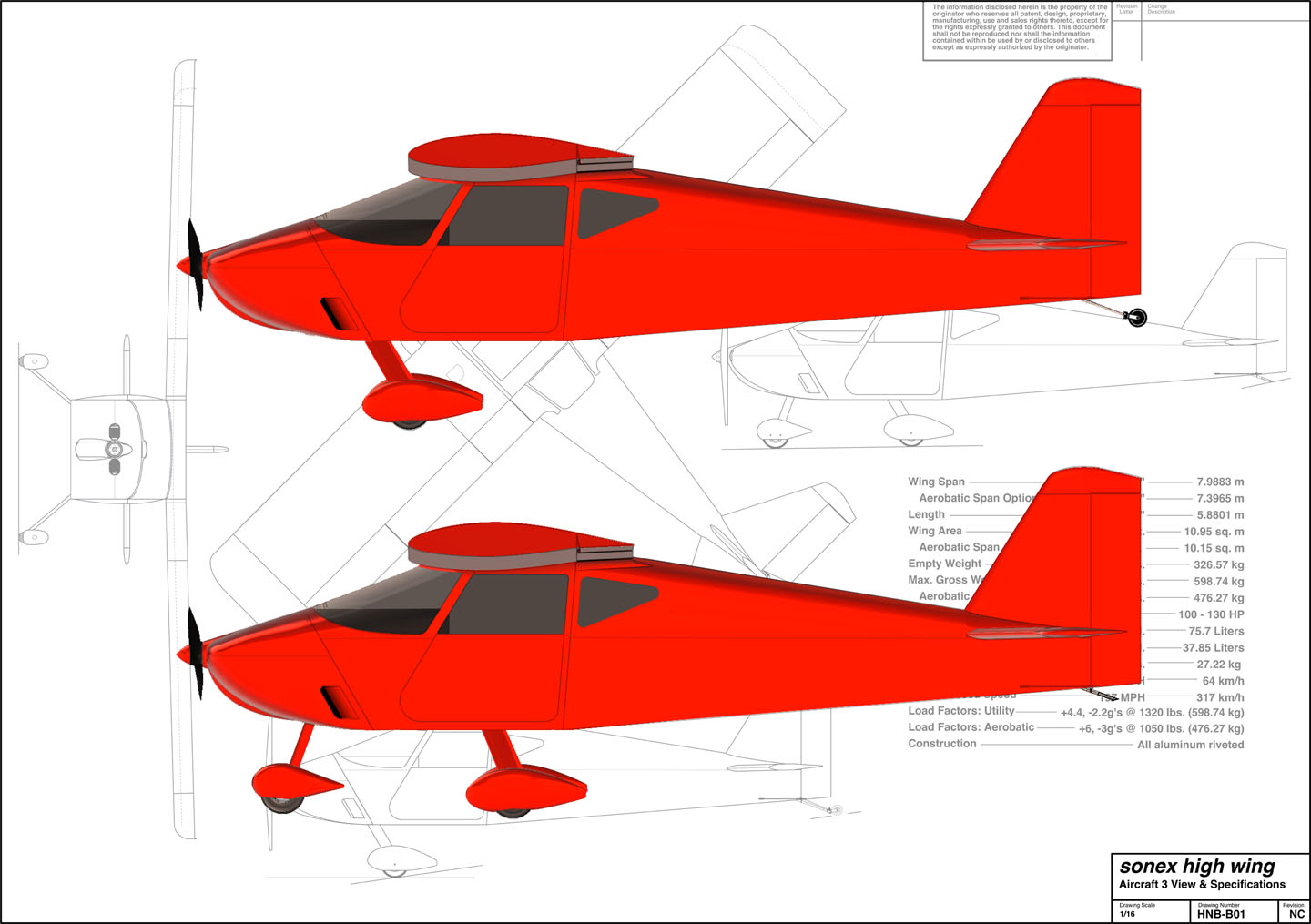
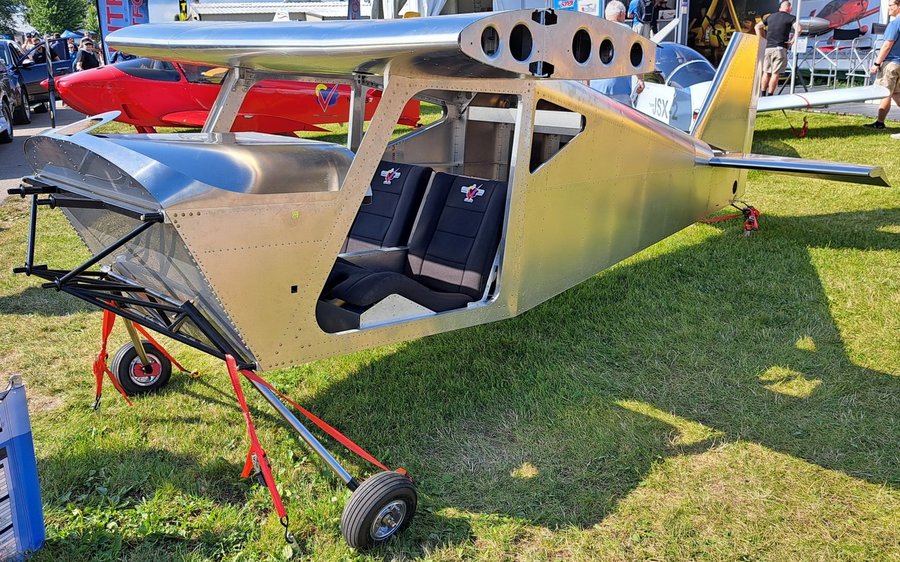
With the recent announcement that Sonex Aircraft is facing bankruptcy I wanted to do this month’s article on their last project known as “the high wing”.
very limited information exist on the aircraft, it was a 2 seat delta wing with a fan pusher configuration from the mid 1970’s
Only 2-3 protypes where built before the project ran out of money.
Beyond the out of funds issue, it looks like a real clean design and if the construction & flight qualities where really dialed in it would have likely done well.
The folding wings & tail would have been a huge selling point.
There is an out of print book about the 2-175 that may come up on e-bay or if you setup some kind of notified search.
Working in aircraft propulsion most of my career for the 1970’s era, a conventional pusher setup like a Long Eze would have done better, I do see a little bit of 737 Max contentions at play with the ducted fan its a much smaller diameter than a conventional prop, this gives it centerline thrust and very short landing gear. In the modern era there are some gas turbines that would likely do well with this configuration. Taking on a unique engine and airframe at the same time is a game of many will enter, few will win.
While a pusher can offer better visibility and “ramp apeal” a tractor configuration usually wins out in the end as most aircraft regardless of configuration need concentrated mass in the nose, not the tail and Tractor aircraft are way better at cooling particularly on the ground. With a Nose wheel configuration, a prop strike is not a factor like it is on a pusher. And like in cars an engine in the front usually provides better crash protection than an engine in the rear.
1st one wont let me embed it but you can click the watch on youtube link in the screen
I know from RC aircraft that delta wing aircraft if designed correctly can be Steller performers with a very high strength to weight ratio structure due to the short, thick wings. The glide ratio is not as good as a long aspect ratio conventional aircraft and can loose energy in a turn however the natural lighter wing loadings often help mitigate some of these flight qualities.
My original Moth (green) was powered by a Norvel .061 and logged a ton of flight time, it is a very reliable with predictable flight qualities. I had a ridiculous armada of RC planes to chose from with much larger, more advanced back in the day however my Green Moth was usually the go to.
2nd one was the E-Moth (blue) built around the time when 3 phase electric motors and lipo batteries first started becoming common in the mid 2000’s. Electric propulsion is more dialed in now to it would be worth it to try out a 5″ racing drone motor on it.
This one is the Climax Delta from RCM Plans, it was also another RC aircraft that I racked up alot of time on, featured a K&B engine with a factory tuned pipe
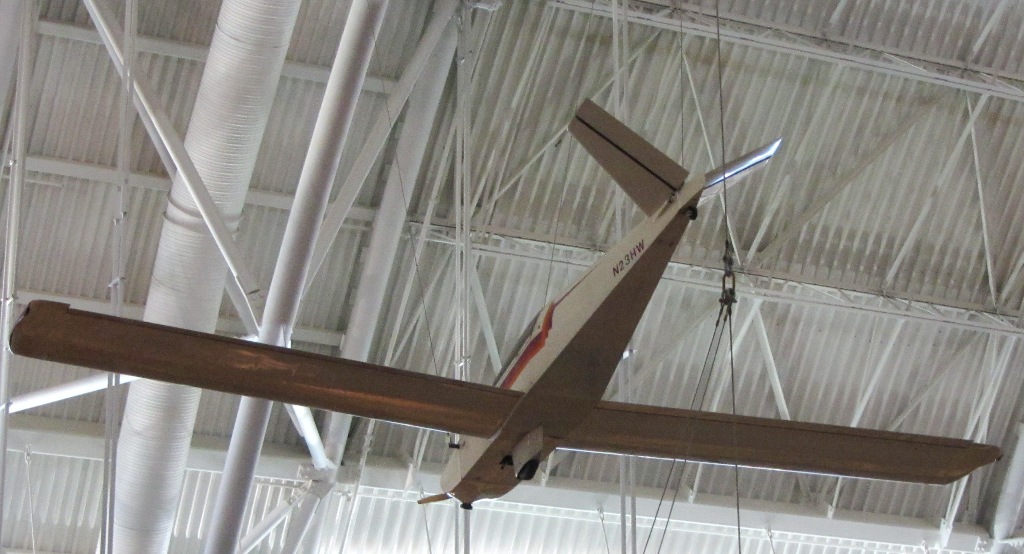
The Moni is the precursor to the Sonex line of home built aircraft both designed by John Monnett. 380 kits where shipped during its 1982 – 1986 run. The aircraft was powered by a 30 hp 2 cylinder engine and is a motor glider.
The original 2019 article did not have any RC options at the time that I could find through normal search sources. Fast forward to 2025 and Outerzone recently published a 60″ span PL-12 by Frank Marcie
While a normal Mooney M20 would be quite a bland aircraft for the list, this one is different. Rather than the “common” engine options this was spiced up with a with a specialty engine from Porsche
Porsche famous for its flat 6 configuration engines spanning decades of production took on a new engine, directly intended at the general aviation market with the PFM 3200. Being developed in the mid 80’s. A few airframes where tried out but the Mooney M20L was the only one with a small production run of 41 units in 1988-1989. Small by car numbers but common in the GA industry. Porsche ran into significant financial troubles in the late 80’s and exited the GA powerplant industry.
I’ve seen one a few times at KAPA centennial before, with its unique pointed nose.
I got to fly a standard issue Mooney once, they where extremely cramped inside but had stunning performance.
Excessive general aviation law suits of the late 80’s / early 90’s also did not help. Still one what have wondered what could have happened if conditions where more favorable.
Working on Corvair auto to aero engine conversions for WW back in the 2000’s I was amazed at how much push back there is in aviation community for anything Auto going into Aero. Take the identification stickers off the M20 shown in this article to the naysayers and they would likely not have a clue the engines genesis was automotive based. Particularly if you said it was a standard, un modified certified Mooney model.
Quite a few YouTube Videos
With 41 units produced one may come up for sale from time to time but would take a real die hard to take the project on as the PFM 3200 was mostly unique part’s requiring one off custom builds to keep it flying beyond basic M20 airframe hardware.
No true M20 plan hits on outerzone for an RC option.