Aviation & Car tech: Reviews, How to's, Products, Shows, Design & Manufacturing, photography, video, Home built aircraft, UAV / RC, General Aviation, Car fix & mod
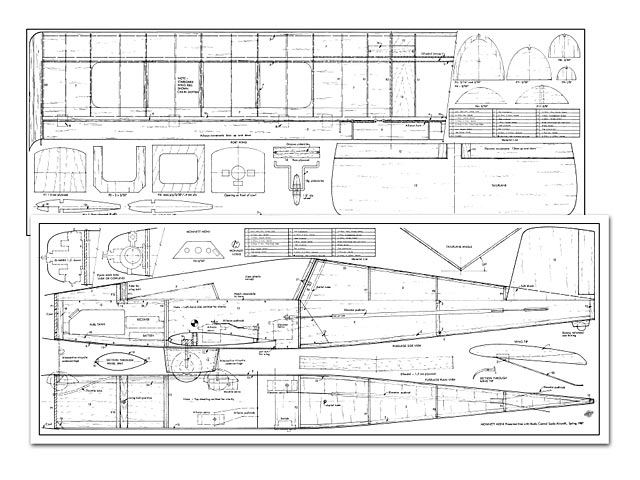
The original 2019 article did not have any RC options at the time that I could find through normal search sources. Fast forward to 2025 and Outerzone recently published a 60″ span PL-12 by Frank Marcie
While a normal Mooney M20 would be quite a bland aircraft for the list, this one is different. Rather than the “common” engine options this was spiced up with a with a specialty engine from Porsche
Porsche famous for its flat 6 configuration engines spanning decades of production took on a new engine, directly intended at the general aviation market with the PFM 3200. Being developed in the mid 80’s. A few airframes where tried out but the Mooney M20L was the only one with a small production run of 41 units in 1988-1989. Small by car numbers but common in the GA industry. Porsche ran into significant financial troubles in the late 80’s and exited the GA powerplant industry.
I’ve seen one a few times at KAPA centennial before, with its unique pointed nose.
I got to fly a standard issue Mooney once, they where extremely cramped inside but had stunning performance.
Excessive general aviation law suits of the late 80’s / early 90’s also did not help. Still one what have wondered what could have happened if conditions where more favorable.
Working on Corvair auto to aero engine conversions for WW back in the 2000’s I was amazed at how much push back there is in aviation community for anything Auto going into Aero. Take the identification stickers off the M20 shown in this article to the naysayers and they would likely not have a clue the engines genesis was automotive based. Particularly if you said it was a standard, un modified certified Mooney model.
Quite a few YouTube Videos
With 41 units produced one may come up for sale from time to time but would take a real die hard to take the project on as the PFM 3200 was mostly unique part’s requiring one off custom builds to keep it flying beyond basic M20 airframe hardware.
No true M20 plan hits on outerzone for an RC option.
An interesting find the D-1 can be quite the rare site with only 12 built and 9 still registered as of 2009. It was designed by John Thorp famous for being the lead on the preliminary design team for the T-16 / PA-28 for Piper and the Thorp T-18 kit-plane. The prototype was originally powered by O-200 engines but where later upgraded to more powerful IO-320′s.
It’s quite the good looking twin but due to many factors it was not produced in mass.
YouTube videos are very limited, here are a few I found:
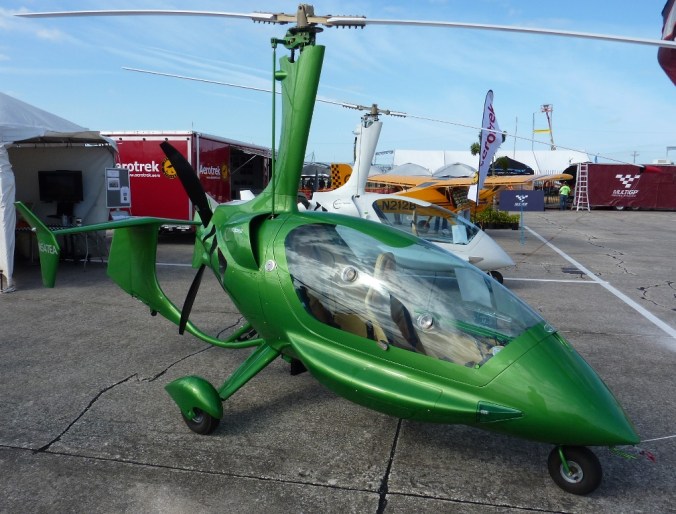
This type of Auto Gyro with a 2 blade main rotor and fairly slim profile makes it easy to transport and store in a trailer. The slow flight speeds can open up all kinds of flight adventures.
For the US market see https://elaaviation-us.com/ for details, looks like they are based out of Okeechobee FL
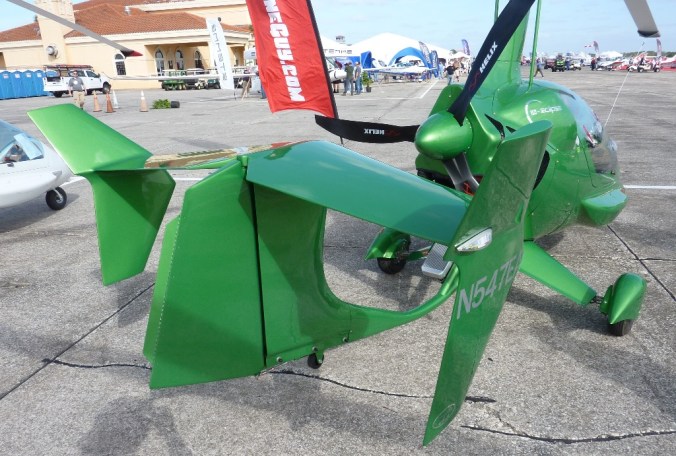
The composites work on this bird was truly impressive and the metallic green color I still remember to this day.
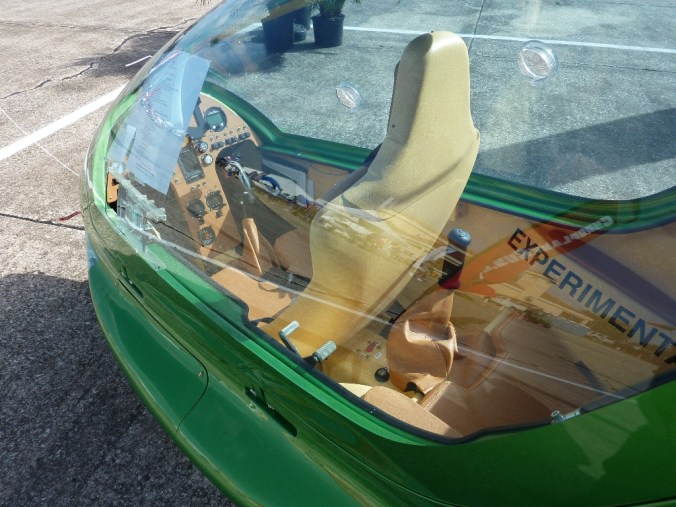
The tandem cockpit was quite ergonomic
impressive looking tail feathers
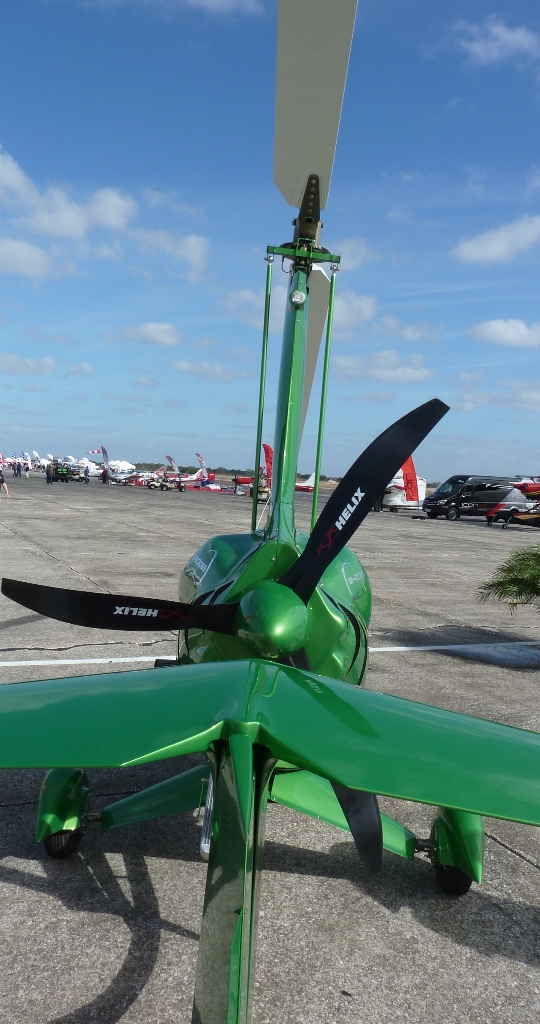
2 Blade main mast
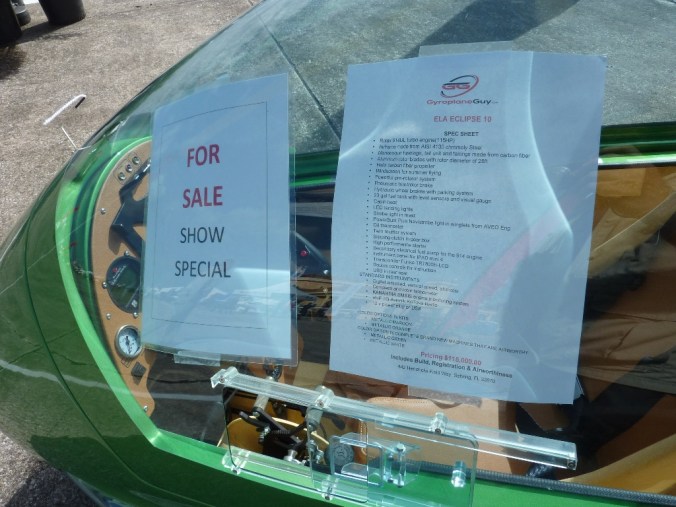
Show special price and build sheet, good thing I took this photo to get the name of the aircraft.
Quite a few YouTube videos on the 10 Eclipse:
I could find no RC options for the 10 Eclipse, in fact RC auto gyros are very rare, I built a scratch built one around 20 years ago, here it is next to my Century 30 hawk RC Helicopter, It flew well but needed a better rotor system for more durability.
The J-3 Kitten is a cub inspired US Ultralight with an empty weight of under 254 Lbs. It features a single seat and tube and fabric construction. First Flight was in 1986.
Power comes from a Rotax 277 / 28 hp or similar power.
The Sling High Wing is a recent E-AB kit plane available from Sling Aircraft. First Flight was at the end of 2020. The first time it actually cut through the noise is when I saw it in a recent Trent Palmer video where N669JP was flying along with Trent’s new Cub on an Idaho adventure. An N number look up let me know the aircraft make & type. Being very familiar with the general Kit Plane offerings this one was rather unique having a slick fuselage, a Tail Wheel configuration and fairly new construction. I knew it was way to big to be a Jabiru and not the right shape to be a Glasair 2+2.
MoJoGrip’s YouTube Channel has been a great ambassador for the Sling TSi where I learned a lot about there low wing aircraft.
The HW is offered in a tail wheel or nose wheel configuration. uses a Rotax 915 iS for power.
The Bellanca Viking was developed in the late 1960’s and with 1,356 aircraft produced they can still be seen at some airports and there are usually a few at the major air shows. It’s DNA can be trased back to the Cruisair that first flew in the late 1930’s. Production run was 1968 – 1975
I found this great exposed view on the https://aerospaceblog.wordpress.com web site. Much thanks to there information for putting this article together.
While its contemporaries at the time from Piper, Cessna and Beechcraft where all Aluminum, the Viking featured a welded steel tube fuselage, wood wings and fabric covering. Unfortunately wood wings require TLC storage or long term environment to last compared to all Aluminum aircraft that are still flying 6 decades later and are still in production.
Viking’s do come up for sale on the various aviation used aircraft web sites. If you have serious interest in one I highly recommend a prebuy with an A&P with wooden aircraft experience.
Likely because of its lower production numbers & a mid 70’s end of production it seems to have a style that is lost in the see it every day PA-28’s & 172’s.
The Lionheart Creations Viking 58 page POH pdf for the MS flight sim can be found on: https://downloads.justflight.com/support/manuals/SV_300_Super_Viking_POH.pdf PDF looks like it could offer good pointers on flying the actual thing as it has a very accurate 3D interior with functioning buttons and controls.
The Integral R is a recent 2 seat acrobatic training aircraft from France. It’s powered by a Lycoming AEIO-390. I think its a fairly sharp looking acrobatic aircraft for a side by side configuration and it reminds me of a CAP 232 also from France. The Integral R is available in a tail draggier and nose wheel config.
This aircraft of the month is the Global Explorer, designed by Dean Wilson for Hubert de Chevigny. Dean was the “grandfather of Idaho bush planes” founding Avid aircraft in the early 1980’s. While Piper Cub configuration aircraft dominate most bush aircraft Avid feature side by side seating with folding wings. The front and back wing spars are aluminum tubes and have wood ribs. They also feature full flying flaperons and highly under cambered airfoils. Avid paved the way for aircraft like the Kitfox, Highlander & Rans. My Dream homebuilt aircraft growing up is the Avid Magnum (9/22 aircraft of the month) a larger o-360 powered version of the flyer series.
As post in Facebook and Instagram can get lost quickly or even deleted thought I would pay tribute to Dean Wilson with this article.
Here is a copy of the text from the Facebook article above:
“Wouldn’t it be great to have a flying RV? Meet the Wilson Global Explorer. Possibly the largest homebuilt aircraft ever built, this monstrous machine was developed in the early 90s by Dean Wilson, prolific designer of the Avid Flyer line of homebuilts. The aircraft was built to order for french explorer Hubert de Chevigny, and designed as a “flying lab”, allowing the frenchman to explore remote regions days at a time. (like Jacques Cousteau)
With a gross weight of 8,000 lb, it was powered by 2 Lycomings (250hp and later upgraded to 300hp). Considering its huge wing area, it was more akin to a powered glider than aircraft, with a cruise speed of 95 kts. Perfect for exploring down low and slow. The cavernous fuselage could comfortably accommodate a small family, and even had enough room to fit an Avid Flyer or Robinson R-22 inside. A glass window built in the rear of the fuselage floor allowed you to watch the fishies..just like a glass-bottom boat!
Surprisingly, given its mission, there are not many pictures to be found, in fact some of the cabin interior shots are screenshots from a video.
Explorer 1 crashed in France, as the pilot attempted to takeoff unaware the spoilers were deployed. “Explorer 2” was promptly built, where it resumed exploration flights in Australia’s Great Barrier Reef, Argentina’s Tierra del Fuego and Bolivia. It was then sold, and also crashed during a ferry flight. Last known location is somewhere in SW France – not sure if there’s plans to resurrect the Explorer. ”
As you can see the global explorer is one huge homebuilt aircraft, the sea plane configuration and twin engines allow this aircraft true global reach.
The interior space of the aircraft is comparable to an RV, fuselage like its Avid predecessors is all small diameter welded 4130N chromoly tubing.
I’m surprised Jimmy Buffet or Kermit Weeks did not have one commissioned for their own use.
Was only able to find 2 videos on YouTube of the aircraft:
Additional info on the Global Explorer is very limited, there are some wood models on ebay (proceed with caution). With a good 3 view an RC scale model would not be too difficult to do.
The Giles 200 series aircraft was a popular Acrobatic aircraft developed in the early 90’s in Scappoose Oregon by AkroTech Aviation Inc. Like the Ultimate Biplane its likely more famous as an RC aircraft than the original. Only 12 single seat G-200’s & 26 tandem seat G-202’s where produced so seeing one at a show may be a rare sight.
I remember seeing all kinds of scales of Giles G-202’s quite often at the Jefco Aeromod lers RC filed in at Chat field resistor south of Denver.
Compared to its contemporaries like the Extra 300 or the Cap 232, the Giles series featured a swept back leading edge and a straight trailing edge. A plan form that is quite common on RC pattern Aircraft.